
Solar STEM Education Classroom Activities
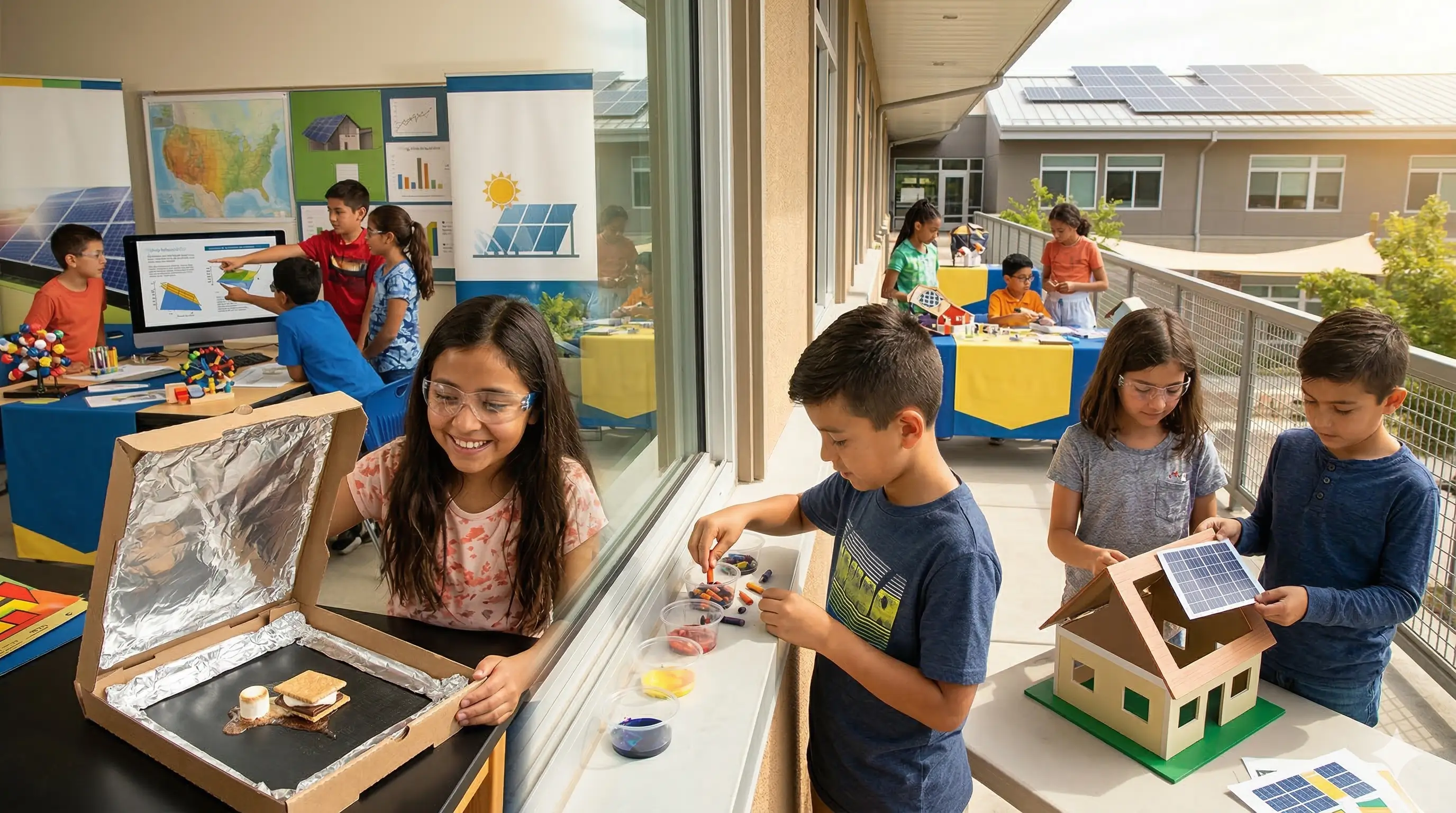
Bringing STEM solar lessons into the classroom helps students connect what they learn in science and math to real-world clean energy solutions.
With solar panels increasingly visible on homes, schools, and businesses across Virginia, Cenvar Roofing & Solar gives teachers ready-to-use activities that turn curiosity about the sun into hands-on learning.
These classroom-friendly lessons encourage problem-solving, data analysis, and critical thinking as students explore how solar energy is generated, measured, and used every day. Whether your school already has solar or is just starting to explore renewable energy, our STEM solar lessons make it easy to spark student engagement and inspire the next generation of innovators.
Sun-Warmed Crayons Art
Students place broken crayons in clear cups or molds in a sunny spot and observe how the sun’s warmth melts them into brand-new rainbow crayons. This simple activity introduces how solar heat can change a solid to a liquid and back again while creating colorful art.
- Children place broken crayons in small clear cups or molds in a sunny spot and observe how the sun’s heat melts them into new “rainbow crayons.”
- Focus: The sun makes things warm and can change solids to liquids and back again when cooled.
Mini Pizza-Box Solar Oven (S’mores)
Invite little learners to build a simple “sun oven” and watch how the sun’s rays turn a regular marshmallow into a warm, mushy treat. Children explore how sunlight brings heat to our planet and changes everyday objects in fun, hands-on ways.
- Students build a simple pizza-box solar oven with foil, plastic wrap, and black paper, then use it to melt chocolate and marshmallows for s’mores.
- Focus: How reflective and dark surfaces absorb and trap solar heat, just like roofs and attics.
Design-a-Roof: Solar vs. Non-Solar
Teams design two model roofs for the same “house”: one with solar panels and one without. Students compare cost, energy, and environmental benefits to decide which roof best meets the needs of a family or school.
- Teams get a model “house” and design two interchangeable roofs: one with printed or toy “solar panels” and one without, then create a data-backed argument for why a solar roof is better for energy and environment (using provided fact sheets, simple kWh/CO₂ examples).
- Focus: Engineering design, tradeoffs, and how rooftop solar turns sunlight into usable energy.
Roof Orientation & Solar Yield Analysis
Students use maps or satellite images of real buildings to analyze roof orientation, tilt, and shading. They then estimate how much energy a rooftop solar system could generate in a year, connecting geometry and data analysis to real-world solar design.
- Using school-building maps or satellite images, students determine roof orientations and approximate tilt, then use online solar calculators or provided irradiance tables to estimate annual energy output for a hypothetical rooftop system.
- Focus: Geometry, data analysis, and site assessment for rooftop solar.

Ready to Take the Next Step With Solar?
Contact us today for a honest assessment of your solar potential. Let us show you how our approach to solar is different, and why hundreds of homeowners have trusted us to power their future.